Your Immigration Guide
Simple visa and Immigration guides without legal jargon
Simple visa and Immigration guides without legal jargon
Back to All Resources
In this guide, we'll walk you through everything you need to know about the I-751 form, will explain how to fill the form and when to file this form.
 David A. Keller, Esq.
Form I-751, Petition to Remove Conditions on Residence, is used to remove conditions for a 2-year conditional green card.
If you received a conditional green card through marriage, you typically must file Form I-751 to convert it into a 10-year permanent green card.
This petition is usually filed jointly with your spouse, but in some cases you can file without your spouse by requesting a waiver.
If you do not file Form I-751 on time, you may lose your permanent resident status and could be placed in removal proceedings.
The goal of Form I-751 is to show that your marriage was entered into in good faith and not for immigration purposes.
USCIS will review your petition, evidence, and may schedule you for biometrics and/or an interview.

The Form I-751 process has several steps, including gathering documents, completing the form, submitting evidence, and waiting for USCIS processing.
Collect documents that show your relationship is genuine and ongoing.
Fill out the form accurately and completely, ensuring all required fields are addressed.
Include evidence such as joint bank statements, leases, insurance, photos, and other records.
Double-check your form and supporting documents, then mail your petition to the correct USCIS lockbox.
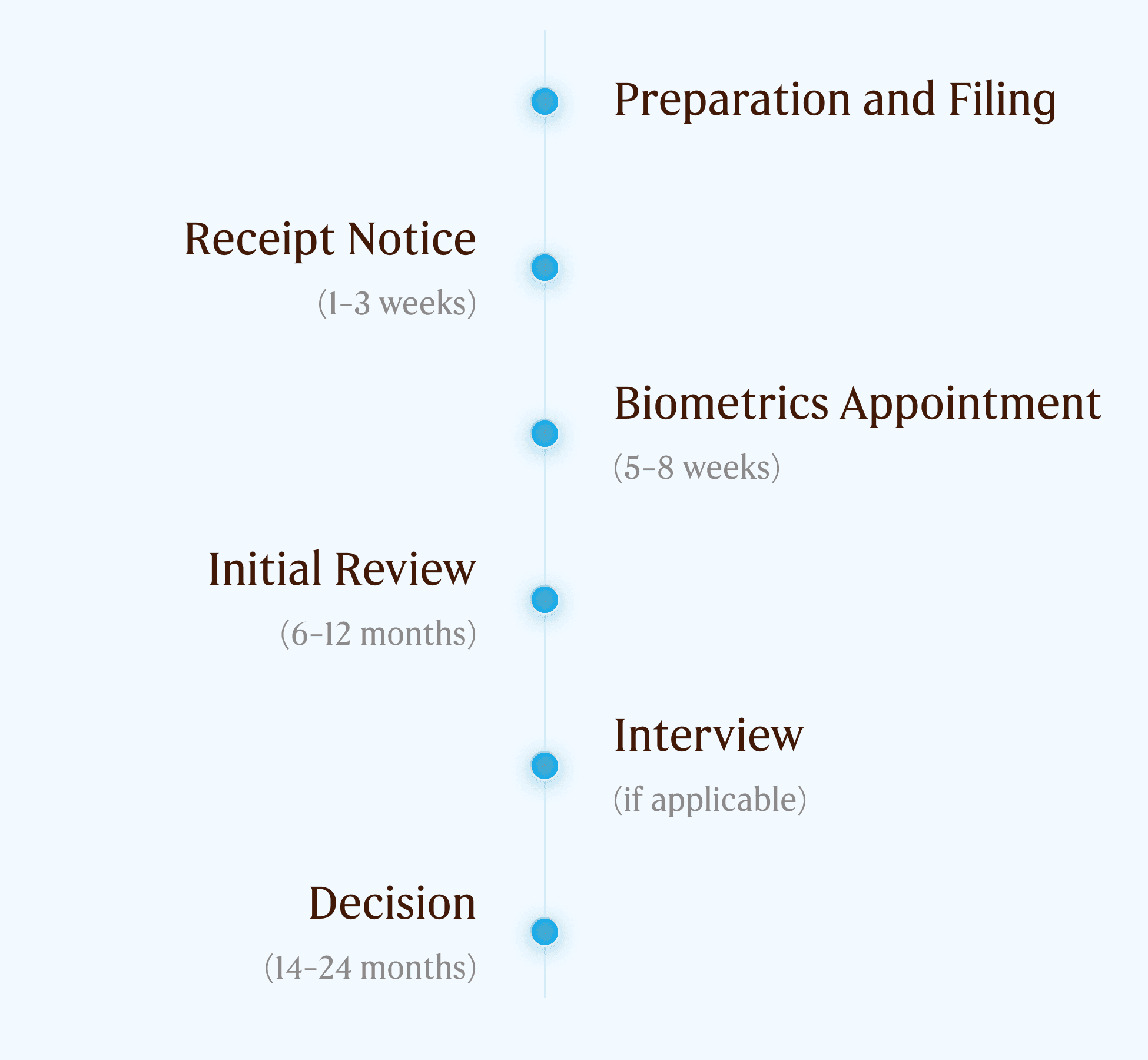
After filing, USCIS typically issues a receipt notice extending your status, schedules biometrics, and later makes a decision.
Processing times vary and may involve requests for evidence (RFEs) and/or interviews depending on your case.

In most cases, you must file Form I-751 during the 90-day window before your conditional green card expires.
Your conditional resident status typically expires two years from the date it was granted.
If you file too early (outside the 90-day window), USCIS may reject your petition.
If you file late, you must include a written explanation and supporting evidence for the late filing.
Late filing can increase risk and may lead to additional scrutiny.
If you are filing with a waiver (for example, divorce or abuse), your filing timing may differ depending on your circumstances.

Always review the form instructions and confirm your specific filing window to avoid rejection.
If you have any concerns about timing, consult guidance before filing.
Form I-751 includes multiple parts and requires careful attention to detail.
You will provide information about the petitioner, spouse (if filing jointly), and details about your marriage and residence history.
You must choose whether you are filing jointly or requesting a waiver.
Most petitioners file jointly with their spouse and submit evidence showing the marriage is bona fide.
Some petitioners file without their spouse by requesting a waiver, such as a divorce waiver or abuse waiver, depending on eligibility.
Be consistent across all forms and evidence—differences in dates, addresses, and names can create avoidable issues.
Tip: Before submitting, review your entire packet for consistency and completeness—small discrepancies can lead to RFEs.
Follow the USCIS instructions closely and ensure signatures are included where required.
If you use an interpreter or preparer, complete the relevant sections.
Include the correct filing fee and supporting evidence with your submission.
If submitting copies, keep originals available in case USCIS requests them.
Organize your packet clearly, with a cover letter and tabs if possible.
If you receive an RFE, respond by the deadline with the requested evidence.
USCIS may waive an interview in some cases, but interviews are more likely in waiver filings or when evidence is weak.
Be prepared to explain the relationship history and provide updated evidence if an interview is scheduled.
USCIS expects evidence that your marriage was entered into in good faith and that you have built a life together.
Common evidence categories include financial commingling, shared residence, shared responsibilities, and photos.
Provide a strong cross-section of evidence across multiple time periods, not just a single month or year.
If you are filing a waiver, include evidence supporting the waiver basis in addition to relationship evidence.
Organize evidence in a logical manner, and label exhibits clearly.
If certain evidence is unavailable, consider explaining why and providing alternatives.
Quality and clarity matter—avoid submitting unclear scans or incomplete documents.
Keep copies of everything you submit for your records.
USCIS may request additional evidence later, so maintain updated records while your case is pending.
Filing Form I-751 requires paying a USCIS filing fee, and you may also need to pay a biometrics fee depending on your case.
Fees can change, so confirm the current amounts on the USCIS website before submitting.
Include the correct payment method as specified in the USCIS instructions for your filing location.
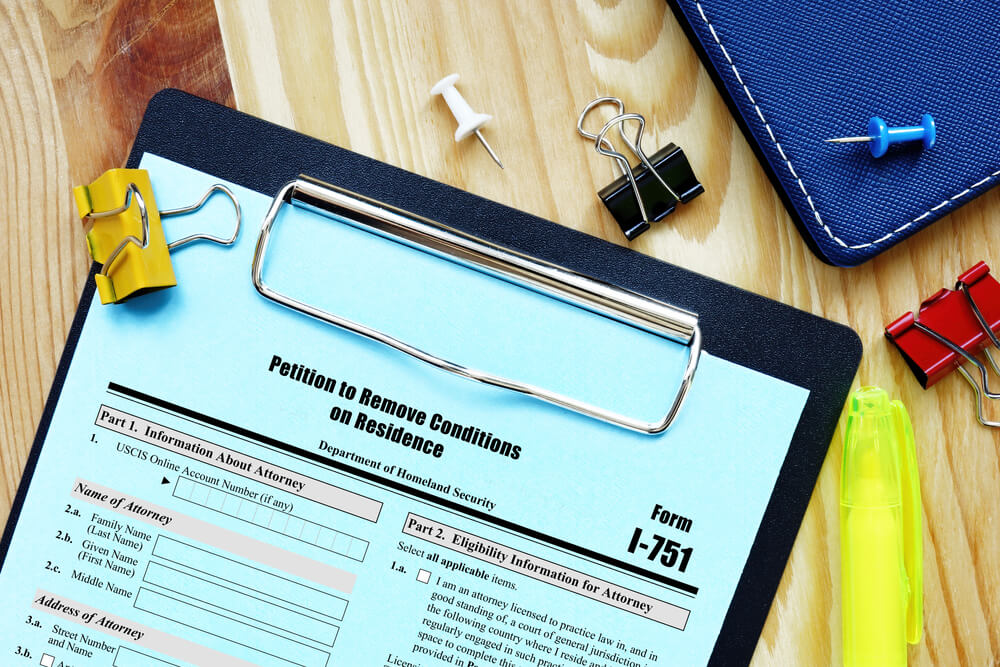
When filing Form I-751, Petition to Remove Conditions on Residence, the correct address depends on where you live.
Always double-check the latest address information on the U.S. Citizenship and Immigration Services (USCIS) website or in the Form I-751 instructions, as this can change.
If you live in:
File Form I-751 to:
USCIS Elgin Lockbox
U.S. Postal Service (USPS):
USCIS Attn: I-751 P.O. Box 4072 Carol Stream, IL 60197-4072
FedEx, UPS, and DHL deliveries:
USCIS Attn: I-751 (Box 4072) 2500 Westfield Drive Elgin, IL 60124-7836
USCIS Phoenix Lockbox
U.S. Postal Service (USPS):
USCIS Attn: I-751 P.O. Box 21200 Phoenix, AZ 85036-1200
FedEx, UPS, and DHL deliveries:
USCIS Attn: I-751 (Box 21200) 2108 E. Elliot Rd. Tempe, AZ 85284-1806
I-751 processing times vary by USCIS workload, lockbox, and service center, and can change over time.
After filing, you typically receive a receipt notice that extends your conditional resident status while the petition is pending.
USCIS usually schedules biometrics, and may later schedule an interview depending on the case.
If USCIS needs more information, they may issue a Request for Evidence (RFE).
Respond to RFEs by the deadline with the requested documentation.
Track your case status through USCIS tools and keep your address updated while your petition is pending.
Not sure if you’re eligible for Form I-751?
Information on Keller Law fees, terms and process
Stay Informed. Stay Ahead.
Keller Law©️.
Schedule Your Free Discovery Call
Take the first step toward resolving your legal challenges. Book a friendly meet-and-greet to get to know each other (no legal advice at this stage). However, if you’re ready for tailored guidance, schedule a direct legal consultation instead.
We’re here to support you every step of the way!
Get in Touch with Us
300 Main Street, 1st Floor Worcester, MA 01608


Monday - Friday | 9AM to 5PM
Saturday | Appointment Only
Sunday | Closed
Disclaimer:
In accordance with rules established by the Supreme Judicial Court of Massachusetts, this site must be labeled “advertising.” It is designed to provide general information for clients and those browsing our firm’s website and should not be construed as legal advice, or legal opinion on any specific facts or circumstances. This website is designed for general information only. The information presented at this site should not be construed to be formal legal advice nor the formation of a lawyer/client relationship.



Powered by AG InfoTech