Your Immigration Guide
Simple visa and Immigration guides without legal jargon
Simple visa and Immigration guides without legal jargon
Back to All Resources
Learn how to file Form I-765 for a U.S. work permit (EAD). See all the steps, fees, timelines, and tips to avoid delays.
 David A. Keller, Esq.
BREAKING NEWS: Effective October 30. DHS will no longer grant automatic extensions to foreign national workers applying for renewal of their EAD. Previously, foreign nationals received an automatic 540-day extension of their work authorization while their renewal was being processed. This means EAD holders will need to file Form I-765 sooner in order to account for processing time, as their EAD could expire before processing completes. Learn more about the DHS’s announcement and read our memorandum about the changes .
Subscribe to our newsletter for immigration resources and news-without the legal jargon.
If you’re living in the U.S. without a green card, you already know the truth: You can’t just start a job because you’re qualified—you need permission.
And in many cases, that permission comes in the form of an Employment Authorization Document (EAD) issued by U.S. Citizenship and Immigration Services (USCIS) after you file a Form I-765.
Henry Lindpere, Senior Immigration Counsel at Keller Law explains:
“Immigration statuses in the U.S. can broadly be organized into three categories:
The I-765 is for all the people in category number 2 above.”
Form I-765, officially called the Application for Employment Authorization, is the form you file with USCIS to request permission to work in the United States.
If it’s approved, you’ll receive an Employment Authorization Document (EAD)—a plastic, government-issued ID card (also often referred to as a work permit) that tells employers you’re legally allowed to work in the U.S.
You need Form I-765 if you’re in the U.S. but don’t already have automatic work rights through your current immigration status. That could include (but isn’t limited to):
People applying for a green card (adjustment of status applicants filing Form I-485 )
Certain F-1 students using Optional Practical Training (OPT) or STEM OPT extensions
Dependent spouses of employment-based visa holders , asylees, people with Temporary Protected Status (TPS)
But if you’re a U.S. citizen or a lawful permanent resident (i.e., green card holder), you don’t need an EAD.
Your proof of work authorization is your passport or green card itself.
Did you know there are multiple types of visas, and they all require specific documentation and processes?
Here is a quick guide to some of the most common visas below.
Nonimmigrant visas:
The B-2 visa is a tourist visa, visitor visa for medical treatment, or a visa for special events.
The B-1 visa is for individuals traveling to the U.S. temporarily for business-related activities, such as attending meetings, conferences, or negotiating contracts.
The J-1 visa is for individuals participating in approved exchange academic or scholarly visitor programs in the U.S.
The O-1A visa is for professionals in science, education, business, and athletics.
The O-1B visa is for those in the arts, motion pictures, or television.
Immigrant visas:
The EB-1 visa is an immigrant visa for individuals with extraordinary ability, outstanding professors or researchers, or multinational executives, offering a fast-track to a green card without needing employer sponsorship in some cases.
The EB-2 visa is an immigrant visa for professionals with advanced degrees or exceptional ability, and includes the National Interest Waiver (NIW) option for those whose work benefits the U.S. and want to self-petition without employer sponsorship.
There are dozens of different types of visas, and this is not an exhaustive list. An experienced immigration attorney can help you choose the right path.
Without an approved EAD card, you can’t legally work in the U.S. for any employer.
Working without authorization can cause serious immigration consequences, from fines to jeopardizing future visa or green card applications.
Filing Form I-765 correctly—and on time—protects both your career and your immigration future.
Tip: Need help with your form I-765? Consult with an immigration attorney. Keller Law is here to help. Request a consultation here .
In this video, Keller Law’s Senior Counsel, Henry Lindpere, walks through Form I-765 and what you need to know before filing.
Not everyone needs a work permit. But if your current immigration status doesn’t automatically allow you to work, Form I-765 is your way to request it.
Here are the main groups who can apply:
Adjustment of Status Applicants: If you’ve filed Form I-485 to apply for a green card, you can submit Form I-765 at the same time (or after) so you can work while your case is pending. This is common for applicants in the EB-1A or EB-2 NIW categories.
Certain Nonimmigrant Workers: This includes people here on temporary visas who aren’t automatically authorized to work for all employers. For example, H-4 dependent spouses of H-1B visa holders who qualify for an EAD.
Students: F-1 students may be eligible for work authorization through Optional Practical Training (OPT), post-completion OPT, or a STEM OPT extension. M-1 students can apply for work authorization after completing their program through practical training.
J-2 Dependents of J-1 Visa Holders: Spouses of certain J-1 visa holders can get an EAD as long as the J-1 shows sufficient funds to support themselves and they will not rely on the income from their J-2 spouse for essential living costs.
Temporary Protected Status (TPS) Holders: Nationals of certain countries designated for TPS can apply for or renew their EAD during their TPS validity period.
Each of these categories has its own eligibility category code you’ll need to enter on the I-765.
You can find the full list of eligibility category codes on the USCIS website .
🧑💼 Curious how others in your field made it work? Keller Law’s experienced attorneys have helped thousands of immigrants secure their future in the U.S. Explore our visa approval notices and success stories to learn how we helped founders, researchers, and artists like you turn their stories into winning petitions.

With so many different forms required for an immigration process, it can be challenging to know when to submit what.
Here’s when to file your Form I-765:
Initial Application: File as soon as you’re eligible under your current immigration status or eligibility category. For example, an F-1 student applying for post-completion OPT can submit their I-765 application up to 90 days before their program end date listed on Form I-20.
Concurrent Filing with Form I-485: If you’re applying for a green card through Form I-485 (Adjustment of Status), you can file Form I-765 at the same time. This lets you work while your green card case is pending—often for months or more than a year. Pairing it with Form I-131 for a travel document can give you both work and travel flexibility during the wait.
Renewal: Apply well before your EAD card expires—USCIS recommends filing 180 days in advance. Certain categories, like H-4 dependent spouses or STEM OPT extension holders, may get an automatic 180-day extension if they file on time.
Replacement: File if your card is lost, stolen, damaged, or contains incorrect information. Use the same form, but indicate you’re requesting a replacement rather than an initial EAD.
Keep these tips in mind to lessen any timeline issues:
Don’t file too early: USCIS may reject your application if it’s outside the allowed filing window for your category.
Don’t file too late: Missing renewal deadlines can lead to a work gap while you wait for approval. (Remember, USCIS recommends filing 180 days in advance of your EAD card expiration.)
Ensure you match you’re eligibility category: Using the wrong code delays processing and could require a refiling.
🔍 Unsure if you’re completing the I-765 correctly? You don’t have to figure it out alone. At Keller Law, we’ll help you chart the smartest path forward, not just file the paperwork. Learn more about working with our experienced visa lawyers .
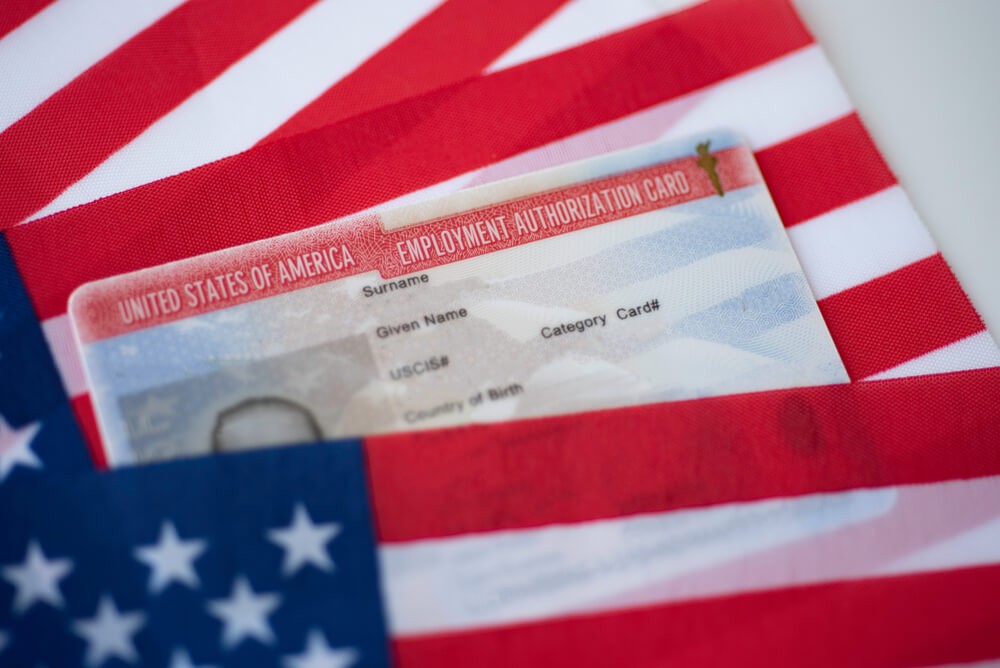
Filing Form I-765 isn’t complicated—but USCIS will reject or delay your case if you skip a step or send the wrong information.
Here’s exactly how to do it in 2025:
Confirm your eligibility
Gather required documents
Complete Form I-765 accurately
Pay the correct fee
Submit your application
Attend your biometrics appointment (if required)
Track your case once submitted
⚠️ This article is for general information only and is not legal advice. If you need help applying for your Employment Authorization Document (EAD), consult with an immigration attorney right away to understand your options. Keller Law is here to help. Request a consultation here .
Before you start the form, make sure you fall under an official eligibility category recognized by U.S. Citizenship and Immigration Services (USCIS).
The full list is on the USCIS Form I-765 eligibility page .
Each category has a code. For example, (c)(9) for adjustment of status applicants, (c)(3)(C) for STEM OPT extension, or (a)(5) for an asylee.
Double-check this code against your current immigration status and supporting documents—using the wrong one can mean a rejection or months-long delay.
Your application isn’t complete without the right evidence.
Most applicants will need:
Completed Form I-765 (make sure you have the latest version)
Copy of your Form I-94 arrival/departure record
Copy of a government-issued photo ID from your home country
Copy of your passport ID page
Copy of your most recent U.S. visa
Two identical passport-style photos (per USCIS specifications)
Proof of your eligibility category
Copies of prior EAD cards (if applicable)
Tip: Check all document dates, names, and numbers. Mismatches—like an old maiden name on a passport—can trigger Request for Evidence (RFE) notices.
The form i-765 instructions are dense, so here’s what they really mean in plain English:
Item Numbers 1–2: Select the right application type (initial, renewal, replacement).
Your Information: Use your full legal name exactly as it appears on official records. Include any other names used (nicknames, maiden name, etc.).
U.S. Mailing Address: Make sure this is somewhere you can reliably receive mail from USPS. Your EAD will be sent to the address you put on this form.
Place and Date of Birth: Must match your passport or birth certificate.
Social Security Number: If you don’t have one, check the box to have the Social Security Administration (SSA) issue you one.
Alien Registration Number (A-Number): If applicable, this will be on prior immigration notices or previous EADs.
Current Immigration Status: Input that here—e.g., “F-1 student” or “H-4 dependent spouse.”
Eligibility Category: Enter the exact code (e.g., c(9), c(3)(B)). Check with an immigration attorney if you need help.
Applicant’s Statement, Contact Information, and Signature: Sign in ink if you’re sending your application through the mail—USCIS doesn’t accept electronic signatures on most forms, unless they’re submitted online.
Tip: Your I-94 record can be pulled from the U.S. Customs and Border Protection (CBP’s) website if you don’t have a paper copy.
Filing fees are adjusted from time to time, so make sure to check the USCIS filing fee schedule to confirm the most up-to-date fees. The fees below are accurate as of August 2025.
The current standard fee is $520 by mail or $470 online.
Some categories have reduced fees or no fees at all, like for certain asylum applicants or if this is your initial EAD and you’ve already paid your Form I-485 filing fee.
Biometrics fee: $85 for certain categories, like Deferred Action for Childhood Arrivals (DACA).
If you can’t afford the fee, request a fee waiver using Form I-912 and provide evidence of financial hardship.
You can submit your Form I-765 by filing online or by sending it by mail.
Filing online is faster for getting a receipt notice, but it won’t make USCIS process your case any quicker.
If you’re filing online, create a USCIS online account to submit your application, upload documents, and track updates.
If you’re filing by mail, send to the correct USCIS lockbox or service center based on your eligibility category and location (addresses listed on the USCIS website).
Next up, if USCIS needs your fingerprints and photo, you’ll be asked to attend a biometrics appointment (which is just a fancy phrase for photo and fingerprints).
You’ll receive a biometrics appointment notice by mail with the date in the standard U.S. (mm/dd/yyyy) format, your appointment time, and location.
Bring the notice, a valid photo ID, and any other documents listed.
Once you get your receipt number after submitting your application, you can use the USCIS Case Status tool to check progress.
You can also sign up for email or text notifications through your USCIS online account.
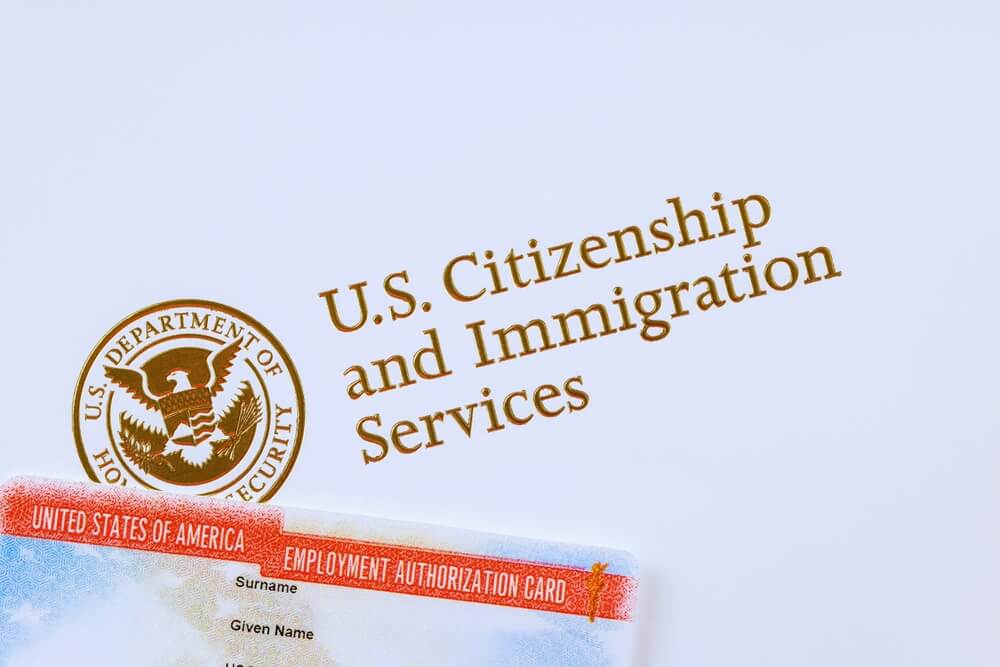
Once you’ve submitted your Form I-765, you’re probably wondering how long it takes until you get a decision.
Unfortunately, there’s no one-size-fits-all answer. But current processing time ranges (for 2025) can be anywhere from 3 to 12+ months.
USCIS processing times for Form I-765 vary widely depending on your eligibility category, where your case is processed, and how complete your application is when it arrives at the USCIS lockbox.
USCIS service center workload : Some locations have backlogs measured in months.
Application completeness : Missing supporting documents or using the wrong eligibility category code can trigger Requests for Evidence (RFEs) and restart the clock.
Category demand : High-demand groups like STEM OPT applicants often see seasonal surges around graduation dates.
USCIS staffing & priorities : Changes in policy or humanitarian emergencies can push certain categories to the front of the line.
But what if you can’t wait months?
🧑💼 Curious about how to get through the process with confidence? Keller Law’s experienced attorneys have helped thousands of immigrants and their families secure their future in the U.S. Request a consultation here .
Generally, no—you must wait for your EAD card to be approved before starting work.
The exception is if your current immigration status (like H-1B or L-1) already authorizes you to work, or if you are applying for a renewal under a category that qualifies for an automatic extension during processing.
But in some cases, you can expedite your form.
Sometimes waiting months for a work permit isn’t an option—especially if a job offer, financial stability, or your family’s well-being is on the line.
While USCIS doesn’t offer “premium processing” for most Form I-765 applications, they do allow expedited requests in certain situations.
USCIS expedite criteria include:
Severe financial loss to a person or company if the case isn’t processed quickly
Emergencies or urgent humanitarian reasons
Requests from nonprofit organizations furthering cultural or social interests of the U.S.
USCIS errors that require quick correction
U.S. government interests (including national security or public safety concerns)
To improve your chances of an expedited permit, prepare a clear written request explaining your urgency, include strong supporting documents (like a job offer with a start date or proof of hardship), and reference your receipt number and eligibility category.
You can contact USCIS by phone or, if you filed online, through your USCIS online account to initiate the request.
Also, some I-765 categories are eligible for premium processing, such as F-1 students applying for OPT.
⚠️ This article is for general information only and is not legal advice. If you need to get through the process fast, make sure you talk with an immigration attorney to submit all required paperwork and evidence correctly the first time. Keller Law is here to help. Request a consultation here .
Even a small error on Form I-765 can cost you weeks—or months—of processing time. Here are the pitfalls we see most often, and how to avoid them.
Mistake
Filing under the wrong eligibility category code
Missing required evidence
Using an incorrect mailing address
Forgetting to sign in ink
How to resolve
Your category code tells USCIS why you’re eligible for a work permit. Using the wrong one can lead to a rejection or a Request for Evidence (RFE). Always confirm your code on the USCIS website before you file.
Forgetting to include supporting documents will put your application on hold until you respond to an RFE. Use a checklist to ensure nothing gets left out.
USCIS has different lockbox and service center addresses depending on your eligibility category and filing method. Sending your completed form to the wrong place can result in it being returned or delayed.
USCIS will reject a mailed I-765 application without a handwritten signature in ink. Electronic signatures are only accepted for online filings. Keep in mind that a missing signature means starting over from scratch.
Keller Law©️.
Navigating the U.S. immigration process can feel like walking through a maze in the dark—but the right information is a powerful start.
At Keller Law, we believe no one should have to battle the system just to understand it. That’s why we write guides like this: to bring clarity to complex processes, one step at a time.
But when it comes to actually moving forward, you deserve more than blog posts. You deserve a clear, personalized strategy—built around your accomplishments, your timeline, and your goals for life in the U.S.
👉 If you’re ready to stop guessing and start planning, our immigration attorneys are here to help. Request a consultation with Keller Law now.
If USCIS denies your Form I-765 application, you’ll get a written notice explaining the reason—such as missing required documents, the wrong eligibility category, or issues with your current immigration status.
Depending on the denial, you may refile with corrected information, request a motion to reopen, or consult an immigration attorney about alternative work authorization options.
File your EAD renewal at least 180 days before the expiration date on your current EAD card.
Some categories may qualify for an automatic 180-day extension if the renewal is filed on time.
An Employment Authorization Document is temporary proof of work authorization tied to your current immigration status or eligibility category.
A green card (permanent residence) provides indefinite work rights and also serves as proof of lawful status in the U.S.
Yes, but only if you have another valid travel document or visa that allows you to re-enter.
If you leave without maintaining nonimmigrant status or without advance parole (for adjustment of status applicants), your I-765 could be delayed or denied.
Processing times in 2025 range from 3 months to over 12+ months for certain adjustment of status cases.
Check the USCIS Processing Times tool for your service center and category code.
The standard filing fee is $520 by mail or $470 online, plus an $85 biometrics fee for certain categories. Some applicants may qualify for a fee waiver using Form I-912.
An EAD is usually approved within 3 to 12+ months, depending on the USCIS service center, category demand, and whether your supporting documents were complete at filing.
Delays are common if USCIS issues a Request For Evidence (RFE).
Applicants in categories such as DACA, certain TPS filings, and individuals facing compelling circumstances under employment-based petitions must pay the additional $85 biometrics fee. This is in addition to the Form I-765 filing fee.
Yes, concurrent filing lets you submit both the I-485 and I-765 application together, often with Form I-131 for travel.
This strategy helps many employment-based and family-based applicants maintain work authorization during green card processing.
No—filing an I-765 doesn’t change your underlying nonimmigrant status. But if your current status expires before your EAD is approved, you could lose work eligibility unless another status or extension is in place.
There’s no premium processing for most I-765 applications, but an expedited request can work if you meet strict USCIS criteria.
For many employment-based applicants, concurrent filing with Form I-485 offers the fastest and most reliable path.
Schedule Your Free Discovery Call
Take the first step toward resolving your legal challenges. Book a friendly meet-and-greet to get to know each other (no legal advice at this stage). However, if you’re ready for tailored guidance, schedule a direct legal consultation instead.
We’re here to support you every step of the way!
Get in Touch with Us
300 Main Street, 1st Floor Worcester, MA 01608


Monday - Friday | 9AM to 5PM
Saturday | Appointment Only
Sunday | Closed
Disclaimer:
In accordance with rules established by the Supreme Judicial Court of Massachusetts, this site must be labeled “advertising.” It is designed to provide general information for clients and those browsing our firm’s website and should not be construed as legal advice, or legal opinion on any specific facts or circumstances. This website is designed for general information only. The information presented at this site should not be construed to be formal legal advice nor the formation of a lawyer/client relationship.



Powered by AG InfoTech