Back to All Blogs
The Mission to the Moon
Needs a Green Card Strategy
 David A. Keller, Esq.
Published November 25, 2026
Back to All Blogs
David A. Keller, Esq.
Published November 25, 2026
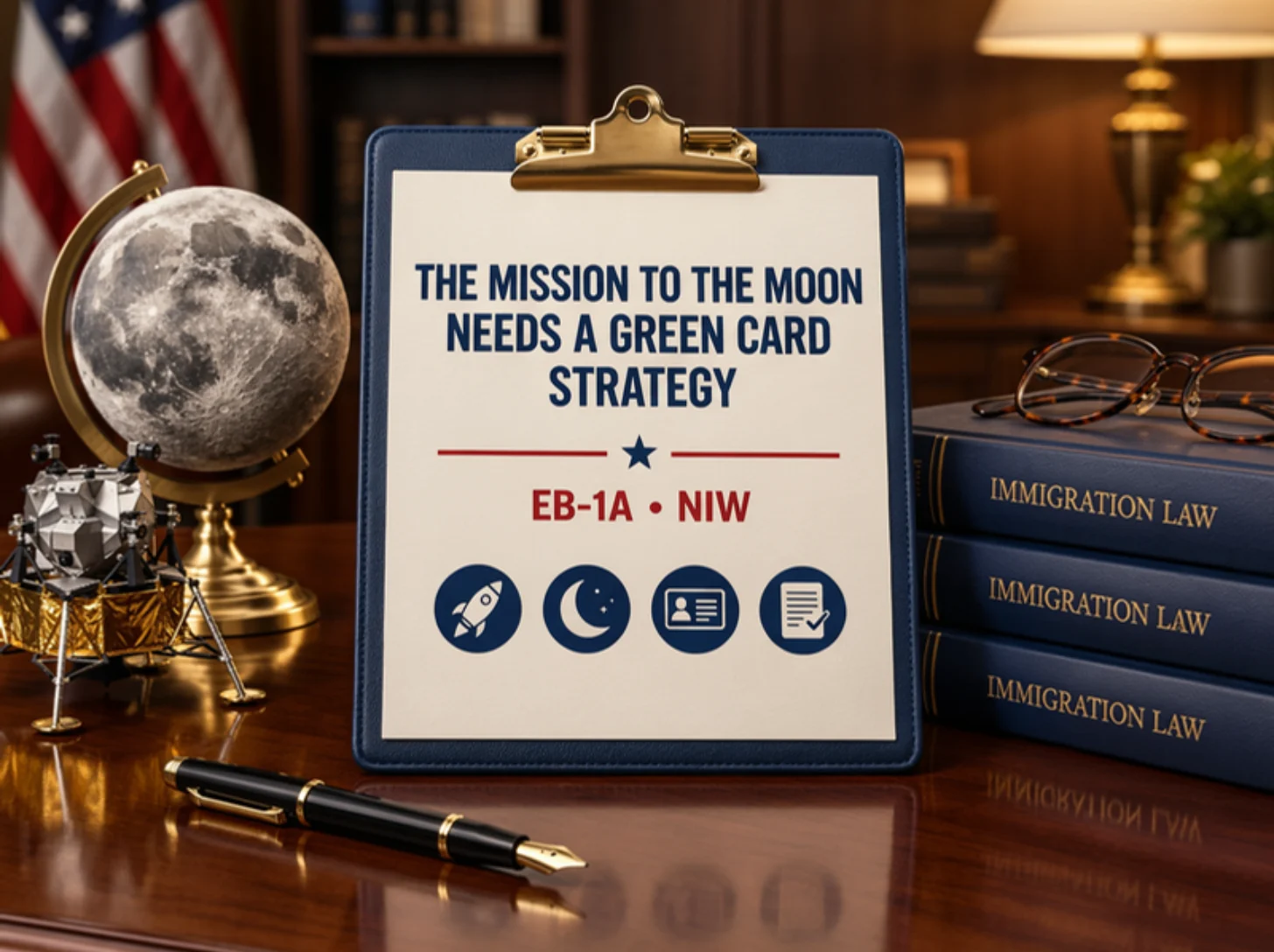
The Mission to the Moon Needs a Green Card Strategy
Where the Moon Mission Stands Now
Why a Green Card Is Part of the Mission
EB-2 NIW: The Leading Case Was Already About Air and Space Propulsion
EB-1A: You Own the Petition, and the 2024 Clarifications Help in Team-Based Space Work
The Questions Aerospace Professionals Actually Ask
How These Petitions Get Into Trouble — and How to Sequence Them
If You Are Part of This Build, Plan the Status as Carefully as the Mission
About Keller Law Group, LLC
Keller Law Group, LLC specializes in immigration law, criminal defense, and personal injury cases. With a commitment to excellence and personalized service, we are here to guide you through every step of the legal process. Visit www.kellerimmigration.com to learn more
Schedule Your Free Discovery Call
Take the first step toward resolving your legal challenges. Book a friendly meet-and-greet to get to know each other (no legal advice at this stage). However, if you’re ready for tailored guidance, schedule a direct legal consultation instead.
We’re here to support you every step of the way!
Get in Touch with Us
300 Main Street, 1st Floor Worcester, MA 01608


Monday - Friday | 9AM to 5PM
Saturday | Appointment Only
Sunday | Closed
Disclaimer:
In accordance with rules established by the Supreme Judicial Court of Massachusetts, this site must be labeled “advertising.” It is designed to provide general information for clients and those browsing our firm’s website and should not be construed as legal advice, or legal opinion on any specific facts or circumstances. This website is designed for general information only. The information presented at this site should not be construed to be formal legal advice nor the formation of a lawyer/client relationship.



Powered by AG InfoTech