Call Us NowEmail Us Now

Back to All Blogs

blog-authorDavid A. Keller, Esq.

Hero Image

Trump Administration Weighs a $100,000 Bond for Green Card Applicants
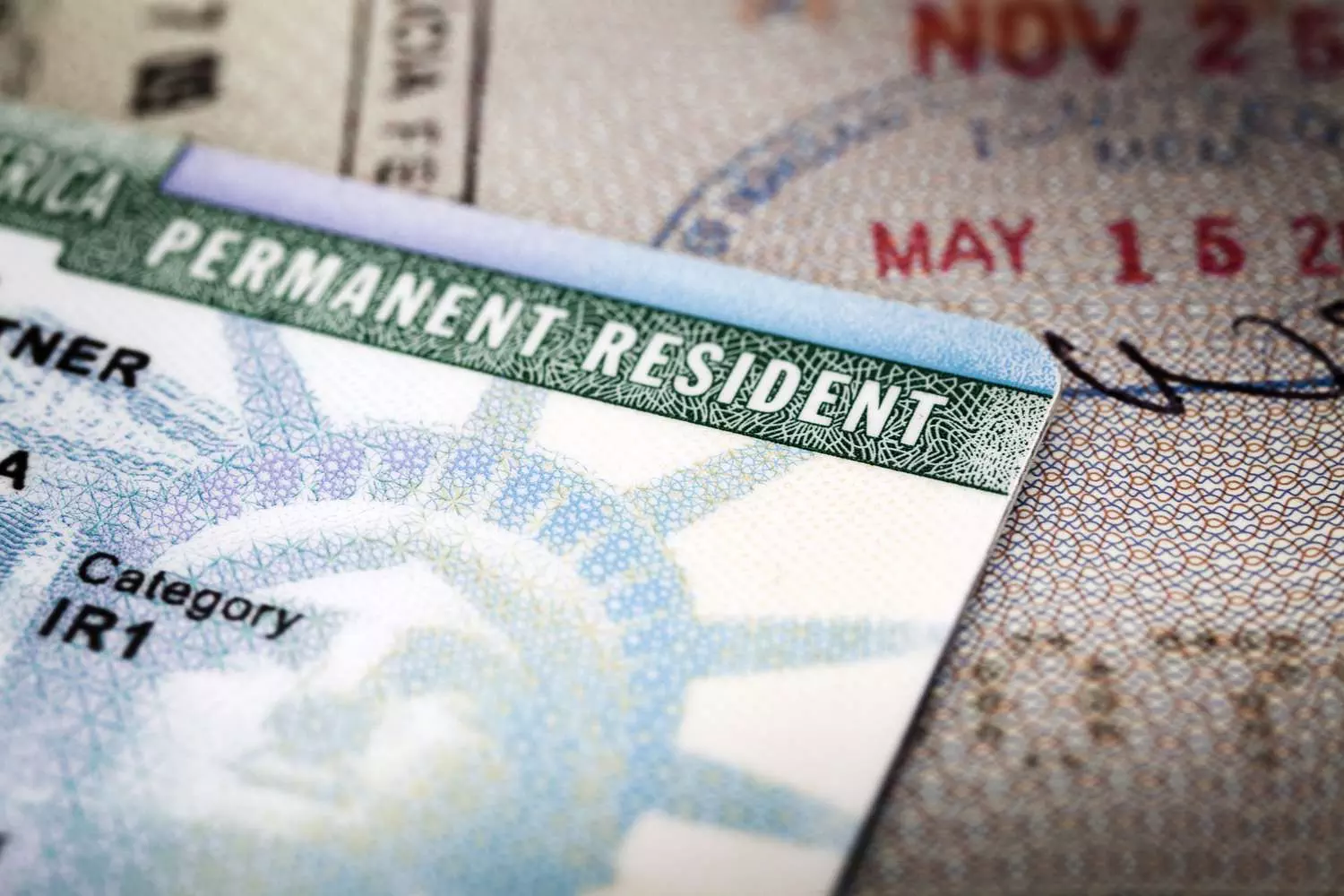
Proposed $100,000 refundable bond for green card applicants at U.S. consulates
In July 2026, multiple outlets reported that the U.S. Department of State — working alongside the Department of Homeland Security — is exploring a policy that would require certain green card applicants to post a refundable bond of up to $100,000 before they are allowed to immigrate to the United States.

The money would reportedly be returned only after the applicant becomes a U.S. citizen — a milestone that, for most people, is at least five years away from the day they receive their green card.

To be clear at the outset: nothing has changed, and no bond is being collected today. But the proposal is serious enough, and the potential financial impact large enough, that anyone with a pending or planned immigrant visa case should understand what is being discussed.

What Is Actually Being Proposed

DetailWhat Has Been Reported
The amountA bond of up to $100,000, with the figure expected to vary from applicant to applicant rather than being a flat charge.
Who would payCertain immigrant visa (green card) applicants processing at U.S. consulates abroad. Family members already in the U.S. could reportedly post the bond on an applicant’s behalf.
Refundable?Yes — but only once the immigrant naturalizes as a U.S. citizen, which typically takes five years of permanent residence (three for many spouses of U.S. citizens).
RolloutReportedly a pilot in a small number of countries first, before any broader expansion. No countries have been named.
StatusUnder consideration only. No effective date, no published rule, and no confirmed list of affected visa categories.

Why the Administration Says It Is Considering This

State Department spokesperson Tommy Pigott framed the idea around ensuring that immigrants are “financially self-sufficient” and do not become a burden on public resources.

In the government’s telling, the bond functions as collateral: if a new permanent resident arrives and cannot support themselves, the bond is there to cover the cost. If the immigrant works, integrates, and eventually naturalizes, the money comes back.

That framing places the proposal squarely within the long-running “public charge” debate — the question of how much financial screening the government may impose on people seeking to live in the United States permanently.

The Legal Basis — and Why It Is Contested

The reported legal hook is the Immigration and Nationality Act, which has long allowed the government to require a bond from an applicant found likely to become a public charge. That authority is real — but it has historically been applied through an individualized determination about a specific person’s circumstances.

The concern raised by immigration attorneys is the gap between that traditional use and what is now being floated. Applying a six-figure bond broadly — by nationality, by visa category, or by country-risk profile — is a very different exercise from deciding that one particular applicant is likely to need public assistance. Immigration attorney Charles Kuck has publicly identified exactly that distinction as the proposal’s weak point.

Others, including former DHS officials, have questioned whether Congress ever intended the bond authority to be used at this scale, particularly when the immigration system already contains substantial financial safeguards.

Remember: Financial Screening Already Exists

This is the point that often gets lost in the headlines. Family-based green card applicants are already subject to significant financial vetting:
  • Form I-864, Affidavit of Support — a legally enforceable contract in which a sponsor commits to maintaining the immigrant at a set percentage of the federal poverty guidelines.
  • Joint sponsors — required when the primary sponsor’s income falls short.
  • Public charge review — consular officers and USCIS already weigh an applicant’s age, health, income, assets, education, and skills.

A $100,000 bond would sit on top of all of that — which is precisely why critics argue it duplicates protections the law already provides.

Where the Idea Comes From: the $15,000 Visa Bond Pilot

The green card proposal did not appear out of nowhere. Beginning in August 2025, the State Department required certain B-1/B-2 visitor visa applicants from Malawi and Zambia to post refundable bonds of up to $15,000, forfeited if the traveler overstayed or violated their status. The framework was later extended to roughly 50 additional countries, most of them in Africa.

Officials have pointed to high compliance rates under that program — citing figures around 97% — as evidence that bonds work. Critics counter that the more meaningful effect was a drop in visa issuance: when the price of entry rises sharply, many people simply stop applying. Whether that counts as success or failure depends entirely on what you think the policy is for.

How This Fits the Broader Pattern

The bond would be the latest in a series of price-based immigration measures:
  • The $100,000 H-1B fee — imposed on new H-1B petitions in September 2025 and struck down in June 2026, when U.S. District Judge Leo Sorokin held that the administration lacked the authority to impose what amounted to a tax without Congress. We broke that fee down in our post on Trump’s $100,000 H-1B visa fee.
  • The “Trump gold card” — a fast-track residency route launched in December 2025 requiring a $1 million contribution plus roughly $15,000 in processing fees. Reported uptake has been far below projections, with only a few hundred requests submitted months after launch.
  • The bond proposal — which, unlike the two above, is refundable, and is being justified under an existing statute rather than as a brand-new fee.

That last distinction matters. The refundable structure and the statutory public charge hook are almost certainly deliberate — an attempt to avoid the reasoning that sank the H-1B fee in court.

What $100,000 Means Next to Today’s Costs

For perspective, here is what green card applicants pay now in government filing fees:
  • Form I-485 (adjustment of status, filed inside the U.S.) — $1,440.
  • Form DS-260 (immigrant visa application, filed abroad) — $325.
  • USCIS immigrant fee — $235.

A $100,000 bond would be several dozen times the entire current government cost of the process. Even though the money is refundable, an applicant would have to tie up that capital for years — realistically, the better part of a decade for anyone sitting in a backlogged category.

Who Would Be Hit Hardest

As reported, the proposal targets consular processing abroad, which means the impact would fall unevenly:
  • Family-based immigrants — spouses, parents, and children waiting abroad to join relatives in the U.S., where the sponsoring family would have to find the cash.
  • Employment-based applicants in long backlogs — including hundreds of thousands of Indian nationals who have already waited years for a priority date to become current.
  • Applicants from targeted countries — if the pilot follows the visitor-visa bond model, selection by nationality is a real possibility — and also the most legally vulnerable design choice.
  • Lower-income families — for whom the bond would not be a delay but a hard stop, regardless of how strong the underlying case is.

It is not yet clear whether applicants adjusting status inside the United States would be affected at all.

Expect Litigation If It Moves Forward

Legal observers broadly expect lawsuits the moment any such policy is formalized. The likely lines of attack:
  • Statutory authority — whether the public charge bond provision can support categorical, six-figure bonds rather than individualized determinations.
  • Rulemaking procedure — whether the administration followed the notice-and-comment requirements of the Administrative Procedure Act.
  • Discrimination concerns — if bond amounts or eligibility turn on national origin.
  • Redundancy — whether the bond duplicates the affidavit of support framework Congress already enacted.

The H-1B fee litigation is the obvious precedent — and a reminder that an announced policy is not the same as an enforceable one.

What You Should Do Right Now

Proposals generate anxiety, and anxiety generates bad decisions. Here is the practical guidance:
  • Do not panic, and do not pay anyone. There is no bond to post. Anyone asking you for bond money today is running a scam.
  • Do not delay a filing you can make now. The clearest lesson of the last two years is that the cost and complexity of immigrating tend to move in one direction. If you are eligible today, file today.
  • Get your documentation in order — sponsor income, tax returns, assets, and affidavit of support materials. Strong financial evidence is your best protection under any public charge framework.
  • Watch for a Federal Register notice. A policy of this magnitude would have to be published before it took effect. Until then, treat every version circulating online as unconfirmed.
  • Talk to a licensed attorney — not a notario, and not a social media account promising inside information.

Concerned About Your Green Card Case? Talk to Keller Law Group

A proposal is not a rule — but the direction of travel is clear, and timing has never mattered more. If you have a family- or employment-based case in progress, or one you have been meaning to start, this is the moment to make sure it is filed correctly and moving.

At Keller Law Group, LLC, we help individuals, families, and employers navigate green card applications, build strong financial and eligibility records, and act before policy changes close the door.

Schedule a consultation today.
Keller Law Group, LLC
Phone: (857) 810-8040
Email: hello@kellerimmigration.com
Hero Image

About Keller Law Group, LLC

Keller Law Group, LLC specializes in immigration law, criminal defense, and personal injury cases. With a commitment to excellence and personalized service, we are here to guide you through every step of the legal process. Visit www.kellerimmigration.com to learn more

Schedule Your Free Discovery Call

Take the first step toward resolving your legal challenges. Book a friendly meet-and-greet to get to know each other (no legal advice at this stage). However, if you’re ready for tailored guidance, schedule a direct legal consultation instead.
We’re here to support you every step of the way!

Schedule Legal Consultation

Connect With Us on Instagram

swiper-image
swiper-image
swiper-image
swiper-image
swiper-image
swiper-image
swiper-image
swiper-image
swiper-image
swiper-image
swiper-image
swiper-image
swiper-image
swiper-image
swiper-image
iphone
View More

We’re Here to Help

Get in Touch with Us

300 Main Street, 1st Floor Worcester, MA 01608

google-maps-logo
Logo

Monday - Friday | 9AM to 5PM

Saturday | Appointment Only

Sunday | Closed

Disclaimer:

In accordance with rules established by the Supreme Judicial Court of Massachusetts, this site must be labeled “advertising.” It is designed to provide general information for clients and those browsing our firm’s website and should not be construed as legal advice, or legal opinion on any specific facts or circumstances. This website is designed for general information only. The information presented at this site should not be construed to be formal legal advice nor the formation of a lawyer/client relationship.

Icon 1Icon 2Icon 3Icon 4Icon 5Icon 6

Powered by AG InfoTech